Understanding Oxidative Stress
Learn how air pollution generates Free Radicals, disrupts your body's natural balance and gradually damages cells, organs and DNA.
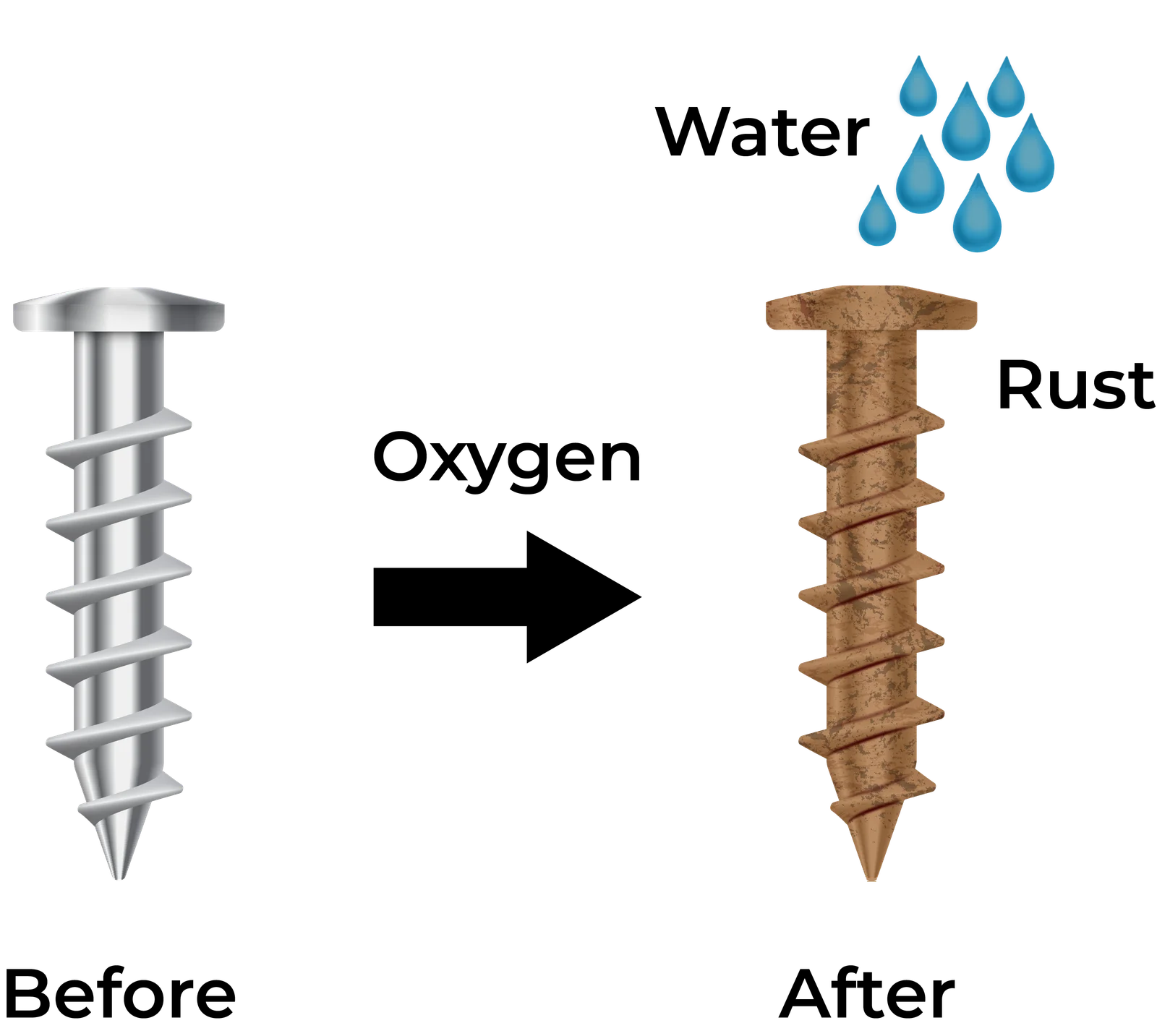
Oxidative Stress is like Rusting.
India faces a growing burden of diseases, including heart disease, lung conditions, and neurological disorders, which may be attributed to India's excessive air pollution.
A major factor in these health issues is OXIDATIVE STRESS, the same process that causes RUST. In a sense, Oxidative Stress causes your body to start RUSTING from the inside and this RUST puts your health at risk. When iron or steel is exposed to oxygen and moisture, it reacts to form a reddish-brown substance called rust, which is primarily composed of iron oxide. This is a typical case of oxidation leading to the destruction of metal items such as tools, vehicles, and structures.
A similar destruction caused by Oxidation, happens inside your body, when it is subject to Oxidative Stress.
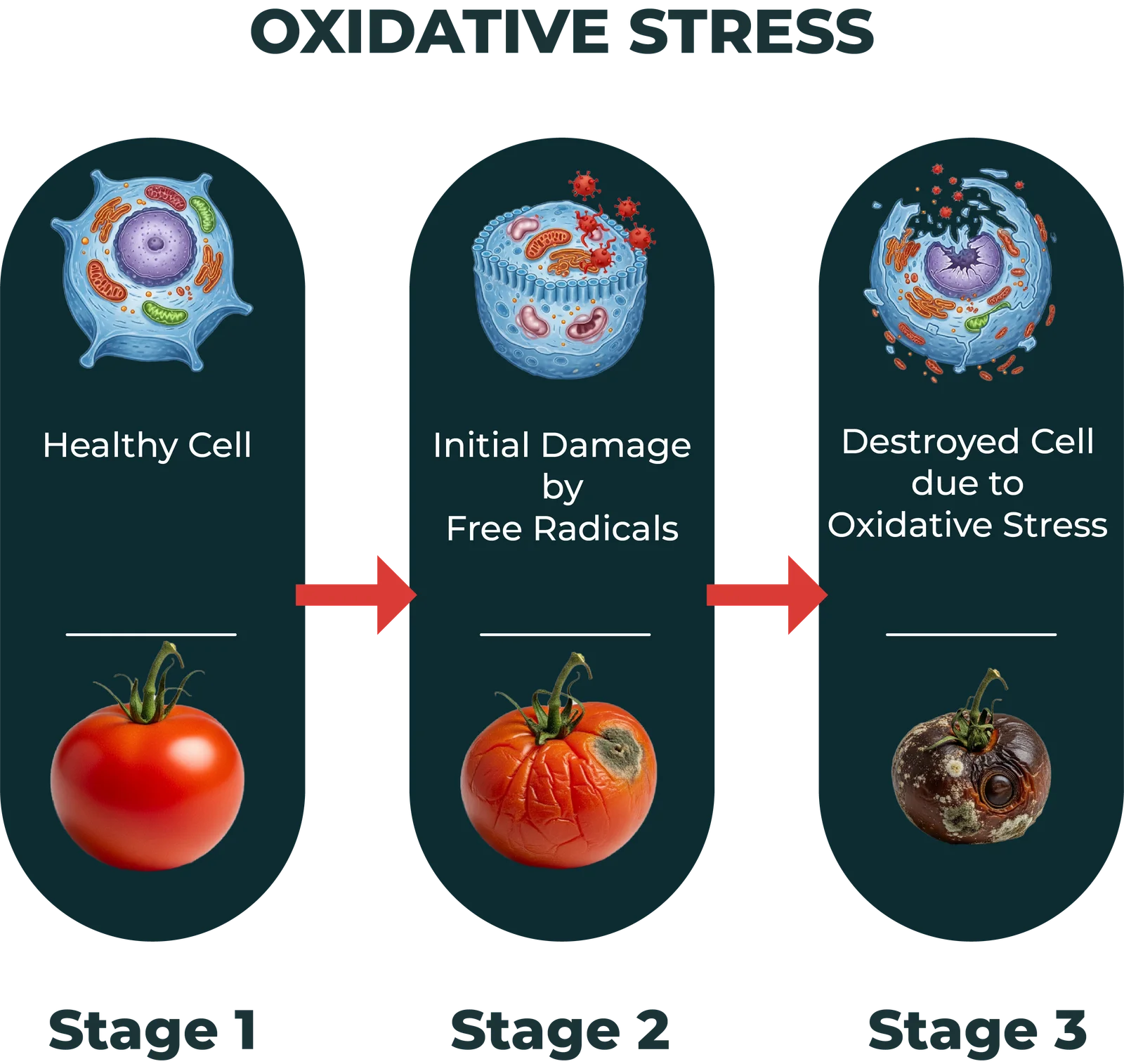
The Three Stages of Oxidation
Oxidative stress is an imbalance in the body where there are
too many
Oxidants (Free Radicals) and not enough
Antioxidants to neutralize them, leading to
cellular damage
causing cellular deterioration, which is responsible for several
chronic and degenerative
diseases in the human body.
Oxidative stress can damage DNA, proteins, and lipids, leading to cellular dysfunction and potentially cell death and cell senescence.It can trigger inflammatory responses, further contributing to tissue damage. Repeated and increasing exposure to pollutants leads to accumulation of Oxidative Stress which increases the damage and accelerates its affects on the body. There are over 200 chronic diseases in peer-reviewed scientific studies linked to oxidative stress.
It is thought to play a role in the ageing process by contributing to
Telomere length reduction,
causing inflammation, and may even
prove fatal in certain cases, irrespective of your age and
sex
Healthy Cell
ROS Formation
Oxidative Stress
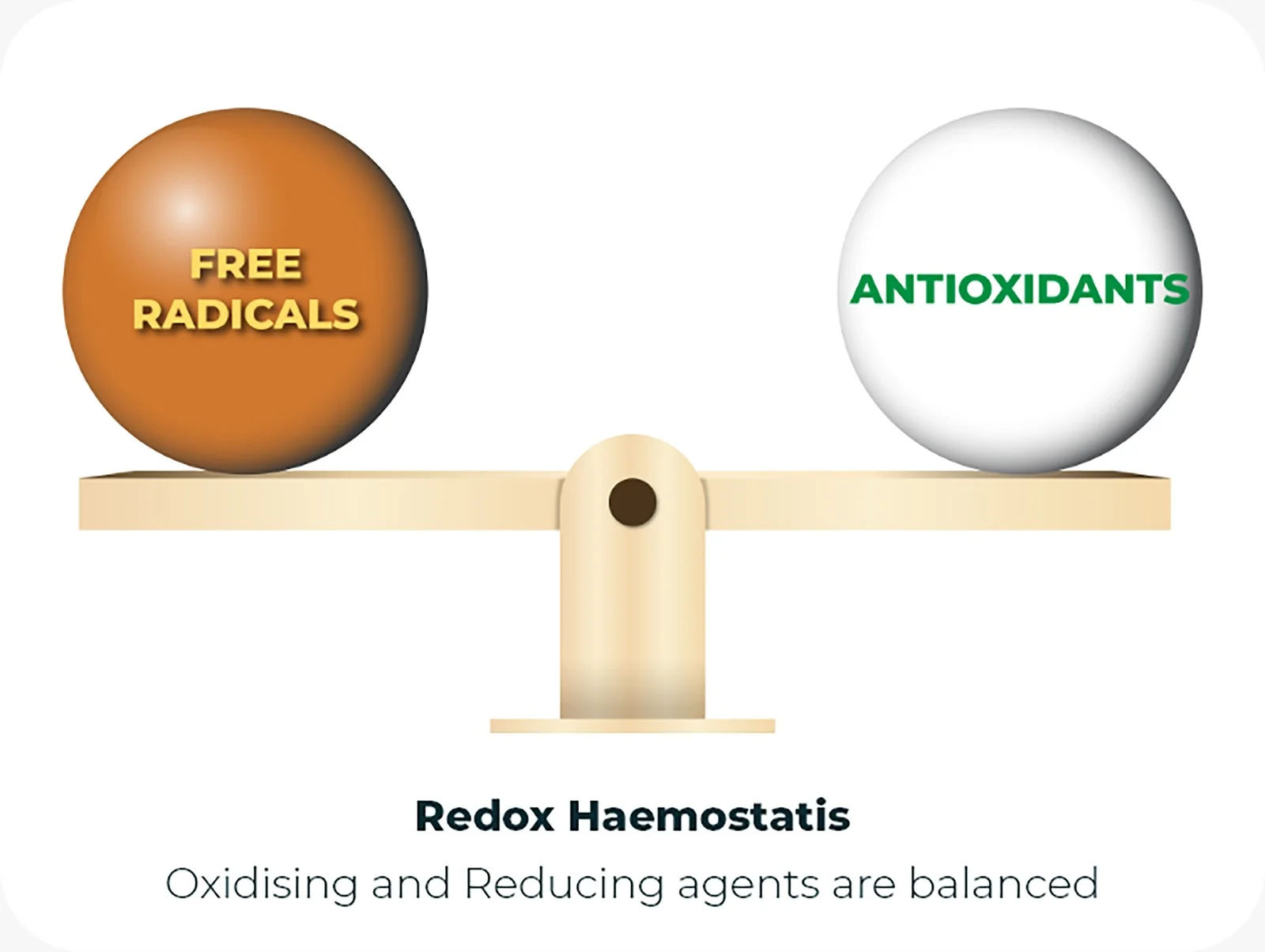
Maintaining The Balance
FRs or Oxidants are naturally produced in the human body and are fundamental to life because they are required for many biological functions, e.g. immune system control and vascular smooth muscle function. In the body, they also defend against environmental challenges such as unknown organisms.
However, it becomes damaging if too much of these oxidants exist by overproduction, lower depletion,
inhalation of pollutants, etc.
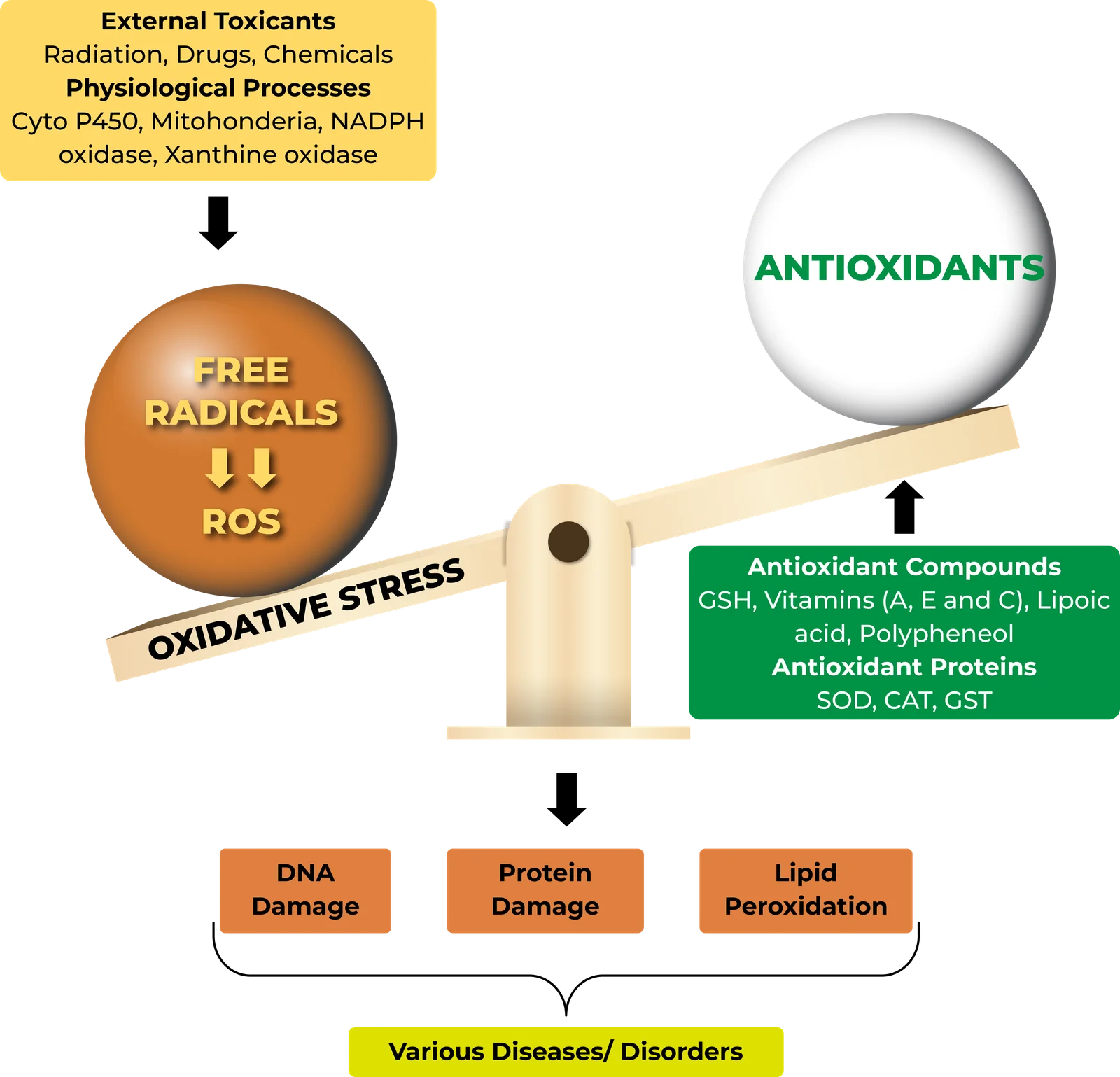
They could cause damage to DNA and proteins, lipid peroxidation,
and enzymes oxidation.
The body has antioxidants, such as those in lung fluids, to neutralize excess oxidants such as free radicals produced from inhaled pollutants like ozone
Effectively, the human body functions by maintaining a fine balance between the Oxidant and Anti Oxidant Levels. Thus, it is important to have a balance between oxidants and antioxidants such that tissues that are damaged, as a result of oxidant based defences, are repaired
When The Balance Breaks
When this balance tips in the favour of Oxidants, the body's defense systems are overwhelmed and oxidative stress occurs,contributing to cell death which leads to tissue damage and diseases. In polluted air, the ambient aerosol particles can represent a source of both Exogenous and Endogenous oxidants.
These oxidants are generally reactive oxygen species (ROS), chemical constituents with Oxygen atoms that are highly reactive in the ambient air. ROS can be constituents of the particles or formed by in situ reactions with the particle after itis deposited in the lungs/
In India, where air pollution levels are high (e.g., Delhi's PM2.5 often exceeds 500 ug/m3 , far above WHO's 5 ug/m limit), pollution induced oxidative stress can occur through reactions such as high Ozone levels combine with Monoterpenes, a class of organic compounds, found predominantly in plants, algae, and fungi, resulting in formation of Secondary Organic Aerosols (SOA) which generate "ROS".